Why Utility Strikes Keep Happening, and What Your Crew Can Do About It
What's Getting Hit? Natural gas lines and telecommunications infrastructure, including CATV, fiber, and related networks, are the most frequently struck utilities. Both come with serious consequences.
Every contractor knows the gut-drop feeling: a backhoe bucket clips something it shouldn't, a drill breaks through a line nobody knew was there, and suddenly a routine dig turns into a very expensive day. Utility strikes aren't flukes. They're one of the most consistent, costly, and preventable problems in the construction industry, and the data backs that up.
The Scale of the Problem: Utility damage during excavation isn't a rare event. It's a daily one. The Common Ground Alliance (CGA) tracks hundreds of thousands of damage reports each year across the U.S. and Canada, with annual totals over 500,000 depending on reporting methodology and participation.
Why Strikes Happen: Here's what makes this problem especially frustrating: the leading causes of utility strikes aren't freak accidents. They're procedural failures, things that could have been avoided.
1. Nobody called 811. The single most common cause of utility damage is simple: no locate request was submitted before digging started. Whether it's time pressure, assumption that an area is clear, or just oversight, skipping the call is the most direct path to a strike.
2. Marks were there and got ignored. Even when locates are completed and lines are marked, damage still happens. Crews that fail to maintain clearance from those marks, either rushing through or working too close, account for a significant share of incidents.
3. The locates were incomplete or inaccurate. This one deserves more explanation, because it's the most misunderstood.
Locating buried utilities is genuinely hard work, and skilled locators do it well under real constraints. But the locate process has limitations that are built into the technology and the records behind it, not the people performing it.
Here's what contractors should understand: Records aren't always current. Utility records (especially for older infrastructure) can be incomplete, outdated, or simply wrong. A line that was installed decades ago may have shifted, been rerouted, or never been mapped accurately to begin with. Locators work from whatever data exists.
If the as-built records are off, the marks will be too. Paint on the surface doesn't equal certainty underground. Electromagnetic locating equipment identifies approximate horizontal position, but depth is a calculation.. not a direct measurement. Signal behavior changes with soil conditions, pipe material, nearby utilities, and line depth. A mark that's accurate within tolerance above ground can still leave significant uncertainty about where exactly the pipe sits two or three feet down.
Tolerances are real, and easy to forget. Most states define a tolerance zone around locate marks, typically 18 to 24 inches on either side. That zone exists precisely because marks aren't pin-point precise. A crew that digs right up to the edge of a paint line, assuming the utility is exactly where the mark sits, is working inside the tolerance zone and taking on real risk.
Multiple utilities compound the complexity. Urban and suburban corridors are often stacked with gas, electric, telecom, water, and sewer lines running in close proximity. Getting one signal clean in a congested right-of-way, while filtering out interference from adjacent utilities, is a technical challenge even for experienced locators.
None of this is a criticism of the locate process.. it's a recognition that locates are a starting point, not a final answer. The mark tells you where to be careful. It doesn't tell you exactly where to stop digging.
The pattern is clear: most strikes happen because the locate process was skipped, incomplete, or ran up against its inherent limitations, not because a utility was genuinely impossible to avoid.
The Equipment Doing the Most Damage:
When equipment type is identified in damage reports, backhoes lead the pack by a significant margin. They're followed by hand tools, horizontal directional drills (HDD), trenchers, and excavators.
One is worth pausing on in particular: hand tools. The assumption that going manual is automatically safe is wrong. Utility strikes during hand digging appear consistently in the damage profile, often because crews move quickly once they think they're in a clear zone.
What's Getting Hit: Natural gas lines and telecommunications infrastructure, including CATV, fiber, and related networks, are the most frequently struck utilities. Both come with serious consequences: gas strikes carry immediate life-safety risk, while telecom cuts can knock out service for thousands of customers and trigger significant liability.
The CGA's reporting also notes a subtle but important distinction: excavation practices drive more of the natural gas damage, while locating errors are a bigger factor in telecom strikes. That means the fix isn't one-size-fits-all. It requires attention to both how you dig and how accurate your locate information is.
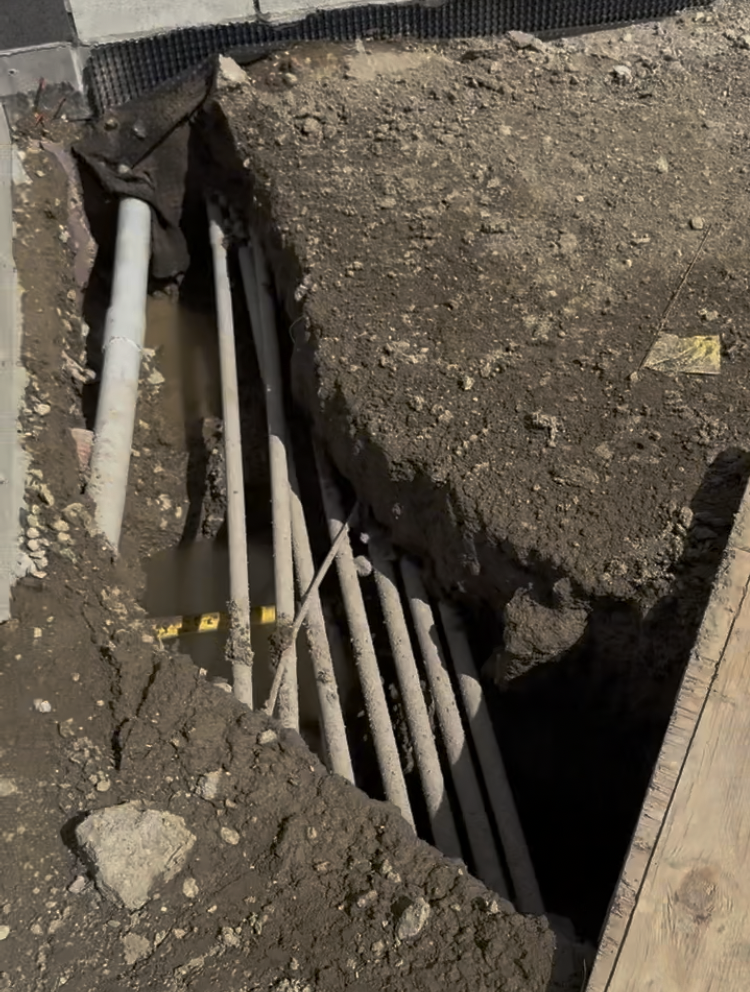
The Smarter Way to Dig Near Utilities: The data points to a clear conclusion: the closer you are to a utility, the more controlled your excavation method needs to be. That's exactly where hydro excavation changes the equation. Mechanical digging doesn't care if it's rock or a gas main. Hydrovac uses pressurized water to break up material and vacuum it away. It's precise. It's non-destructive. And it exposes utilities without striking them.
For crews working near buried infrastructure, calling a vac truck isn't just a specialty service. It's the appropriate tool for the job. Whether you're daylighting a line before your backhoe goes to work, potholing ahead of an HDD shot, or exposing utilities in a congested urban corridor where the margin for error is zero, the right equipment makes the difference.
Protecting Your Schedule, Budget, and Crew: A utility strike doesn't just stop the job. It starts a cascade: emergency response, utility repairs, regulatory reporting, potential fines, project delays, and insurance complications. For the contractor on site, the cost is almost always far greater than whatever time was saved by skipping a careful expose. The contractors who minimize strike risk aren't the ones with the most luck. They're the ones who treat every dig near a utility as a precision operation, starting with the 811 call, honoring the marks, and using non-destructive methods when they're working close to the line.
Ready to work with Kansas City's best hydrovac team?
Get a fast, transparent quote for your next project.
Request a Quote