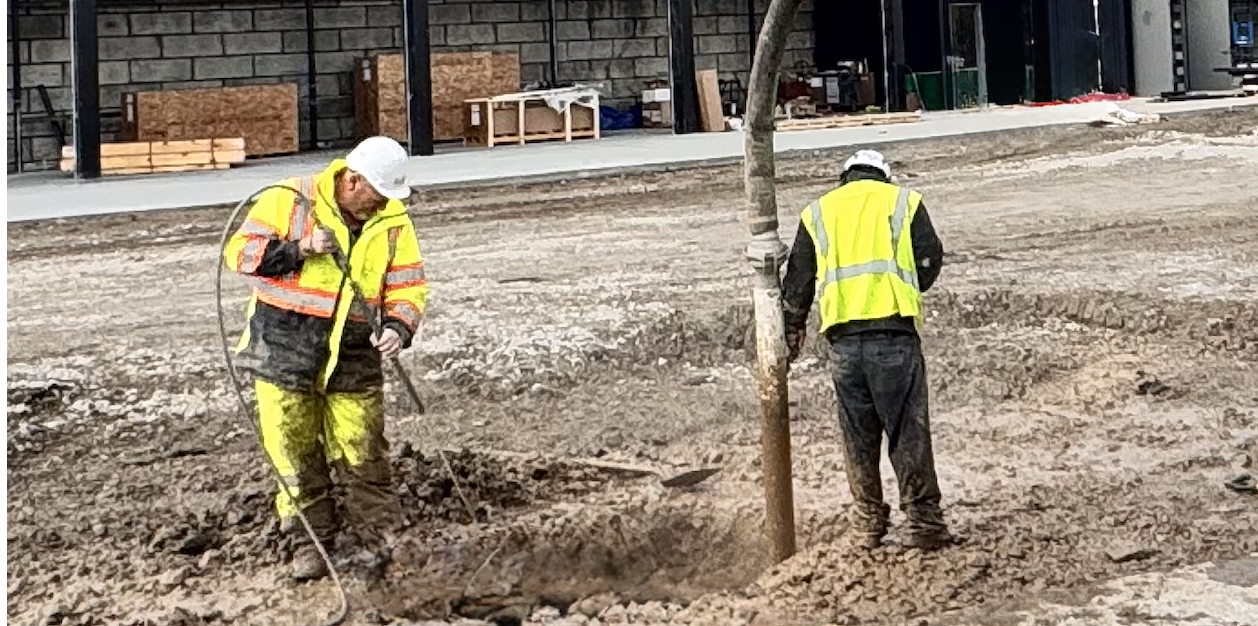
How Much Does Hydro-excavation cost?
It's the first question almost everyone asks, and it's often one of the hardest one to answer.
Unlike a material order or an equipment rental with a published price list, hydrovac services are built around what actually happens on a specific job. Two holes that look identical on a site plan can come in at very different costs depending on soil conditions, site access, water availability, and how far the truck has to travel. That said, the pricing structure isn't mysterious. Once you understand what the line items are and why they exist, you can put together a reasonable budget estimate and have a more productive conversation with any provider you call.
The Starting Point: Hourly Rate and Minimums
Most hydrovac providers bill by the hour, and have either a minimum number of billable hours or a mobilization fee, sometimes both. These exist for the same reason: getting a specialized truck, crew, and equipment to your site has a fixed cost regardless of how long the job takes. A provider that sends a truck for a one-hour job can still have the same overhead as a four-hour job.
Hourly billing is typically measured port to port, meaning the clock starts when the truck leaves the yard and stops when it returns. Travel time to and from your site is part of the billable time, so job location relative to the provider's base of operations matters when you're comparing quotes from different companies.
Surcharges You'll See on Most Invoices:
Beyond the base rate, hydrovac quotes commonly include several surcharges. These aren't padding. Each one reflects a real variable cost that changes from job to job.
Water Surcharge. Hydrovac equipment runs on a large onboard water supply. When that tank runs dry on a job and the truck needs to refill, that refill carries a per-load charge, or hourly rate. On longer jobs or deep excavations that consume a lot of water, this can add up. If you have a water source on-site and can supply it directly, most providers will waive this fee. It's one of the easiest costs to eliminate just by asking upfront. Fuel Surcharge. Some providers apply a fuel surcharge that fluctuates with diesel prices. A hydrovac truck is a heavy, high-consumption piece of equipment, and fuel is one of the more volatile operating costs in the industry. If you're comparing quotes, make sure you're looking at whether fuel is baked into the hourly rate or listed separately, since it affects how the numbers stack up. Hot Water Surcharge. Cold-weather excavation often requires heated water to break up frozen ground. Running the heating system on a hydrovac truck consumes significantly more fuel and puts more demand on the equipment. Providers who operate year-round typically apply a hot water surcharge during winter months or any time heated water is required. If you're scheduling work in cold conditions, ask whether the job will require hot water and factor that in. Disposal Fee. Everything the truck vacuums up has to go somewhere. If there's an approved location on your site to offload spoils, disposal usually isn't a separate cost. If the truck needs to haul material to an offsite facility, that cost gets passed along, typically at the facility's actual rate plus a handling percentage. Soil type matters here: clean native soil is inexpensive to dispose of, while material with any contamination classification can carry significantly higher fees and logistical issues. Knowing your site conditions before you call will help you get a more accurate estimate.
Why the Same Job Can Quote Differently:
Even with identical surcharge structures, two providers can quote the same job at different totals. A few things drive that: Soil conditions. Loose, dry soil vacuums quickly. Wet clay, compacted fill, caliche, or rocky ground slows everything down. Estimated hours are based on expected conditions. If the material is harder to cut through and remove, the hours will reflect that. Depth. Deeper excavations take more time and more water. A two-foot pothole and a six-foot utility exposure are not the same job even if the footprint looks the same. Access. A truck parked close to the work area is efficient. A long hose run, confined space setup, or difficult site access adds time. Volume. Mobilization and minimums hit harder on small jobs. The more holes or linear footage you can consolidate into a single dispatch, the better the overall cost per unit tends to look.
What to Have Ready When You Call:
Providers who can give you a reliable estimate need good information to work from. The more specific you can be, the closer your estimate will be to your actual invoice. Helpful details include the number of holes or exposures, approximate depth, soil type if known, whether you have on-site water and a disposal location, job site address, and any access constraints worth flagging.
Vague requests produce range estimates. Specific requests produce numbers you can actually plan around. If conditions change on the day of the job, time-based pricing will reflect that, and any reputable provider will tell you that upfront rather than bury it in the invoice.
Ready to work with Kansas City's best hydrovac team?
Get a fast, transparent quote for your next project.
Request a Quote